
Your Garage Door Works Hard — It Deserves a Little Attention
Think about how many times you open and close your garage door each day. Twice? Four times? For most families in Wonder Lake, the garage door cycles anywhere from 1,000 to 1,500 times per year. That's a lot of wear on springs, cables, rollers, hinges, and the opener — all working together to lift and lower a door that can weigh 150 to 400 pounds.
Despite all that use, the garage door is one of the most neglected parts of a home. Most people don't think about it until something breaks, makes a terrible noise, or refuses to open on a Monday morning when they're already running late.
Regular maintenance can prevent most of those headaches. But how often should you actually service your garage door, and what does a proper tune-up involve? Let's break it down.
The Short Answer: At Least Once a Year
At minimum, your garage door should be professionally serviced once a year. Think of it like an annual checkup for your car — a trained technician can spot small problems before they turn into expensive repairs or safety hazards.
If your garage door gets heavy daily use — for example, if multiple family members come and go throughout the day, or if you use your garage as a workshop — twice a year is a better schedule. The same goes for older doors or systems that have had previous repairs.
Here in Wonder Lake, seasonal changes also play a role. Our cold winters and humid summers put extra stress on garage door components. Scheduling service in the spring and fall helps ensure your door is ready for the extremes ahead.
What's Included in a Garage Door Tune-Up?
A proper garage door maintenance visit isn't just a quick glance and a thumbs-up. Here's what a thorough service appointment should cover:
Visual Inspection
The technician will examine every visible component of the door system — panels, tracks, springs, cables, rollers, hinges, brackets, and weatherstripping. They're looking for signs of wear, rust, fraying, cracks, or misalignment.
Lubrication
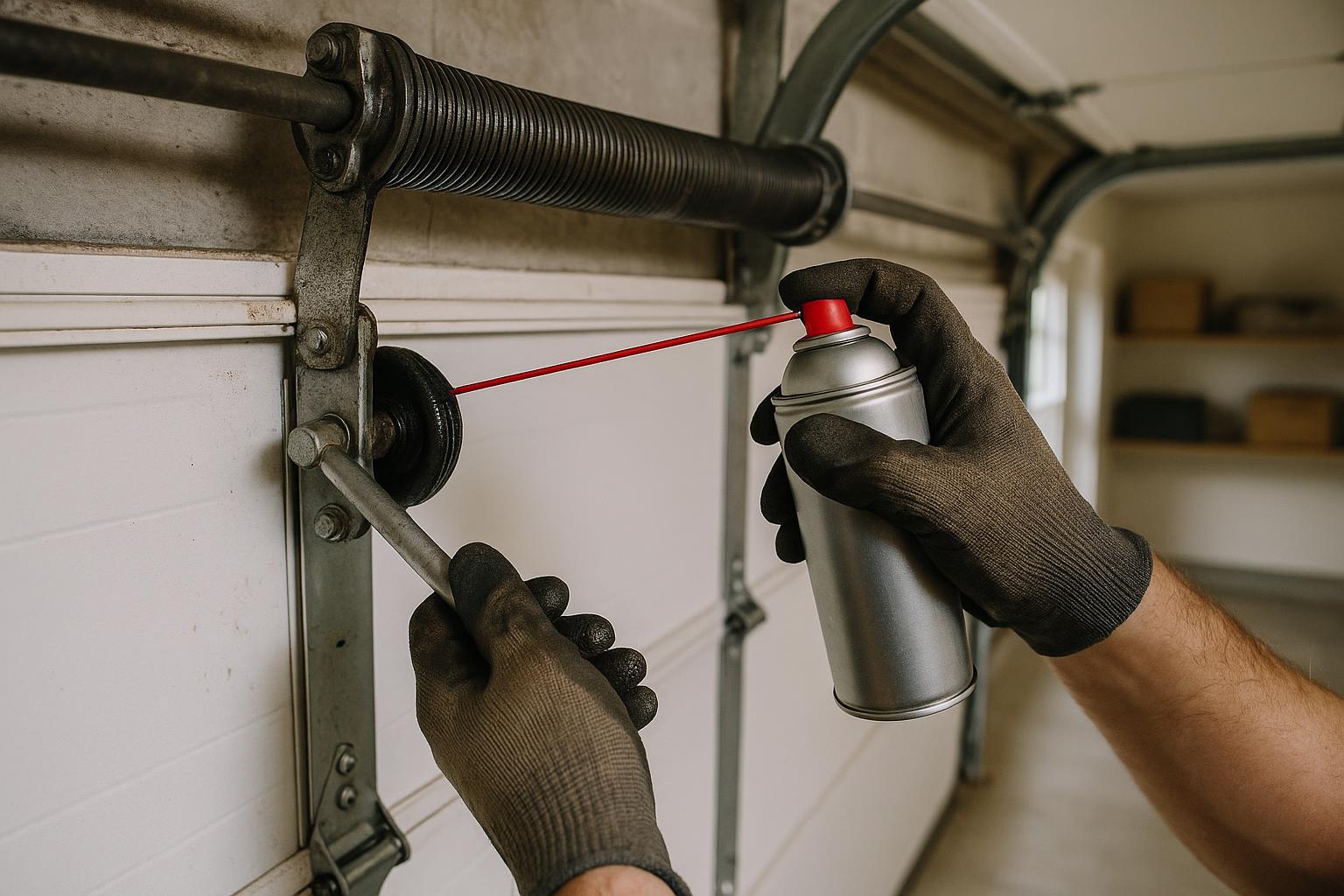
Moving parts need lubrication to operate smoothly and quietly. A technician will apply the right type of lubricant to the springs, rollers, hinges, and bearing plates. This reduces friction, cuts down on noise, and extends the life of your hardware. Using the wrong lubricant — or skipping it entirely — can cause parts to wear out much faster.
Balance Test
A properly balanced garage door should stay in place when you manually lift it halfway and let go. If it slides up or drops down, the springs are out of balance. An unbalanced door forces the opener to work harder, which shortens its lifespan and increases the risk of a breakdown.
Safety Reversal Test
Every garage door opener manufactured after 1993 is required to have an auto-reverse feature. During maintenance, the technician will test the mechanical and photo-eye reversal systems to make sure they're functioning correctly. This is especially important if you have children or pets.
Track Alignment
Even slightly misaligned tracks can cause the door to bind, make grinding noises, or go off track entirely. The technician will check that the tracks are plumb, level, and properly spaced.
Hardware Tightening
Vibration from daily use gradually loosens bolts, brackets, and screws. A maintenance visit includes tightening all the hardware to keep everything secure.
Opener Inspection
The technician will check the opener's motor, drive system, remote signals, wall button, and safety features. They'll also check the force settings to make sure the door opens and closes with the right amount of power.
What You Can Do Between Professional Visits
You don't need to be a garage door expert to keep an eye on things between annual service appointments. Here are a few simple things any homeowner can do:
- Listen for unusual sounds. Grinding, scraping, popping, or squealing noises are signs that something needs attention.
- Watch the door move. It should travel smoothly along the tracks without jerking, hesitating, or shaking.
- Look at the springs and cables. If you notice fraying cables, gaps in the springs, or rust buildup, call a professional. Never attempt to adjust or replace springs yourself — they're under extreme tension and can cause serious injury.
- Keep the tracks clean. Wipe away dirt, cobwebs, and debris from the tracks with a damp cloth. Avoid using WD-40 or grease on the tracks themselves.
- Test the auto-reverse. Place a roll of paper towels on the ground in the door's path and press the close button. The door should reverse when it contacts the object. If it doesn't, stop using the door and call for service.
- Check the weatherstripping. Cracked or missing weatherstripping along the bottom and sides of the door lets in cold air, moisture, and pests. Replacing it is inexpensive and makes a noticeable difference in your garage's comfort and energy efficiency.
The Cost of Skipping Maintenance
It's easy to put off garage door maintenance when everything seems to be working fine. But neglecting your door almost always costs more in the long run. Here's what can happen:
- Premature spring failure. Springs that aren't lubricated or balanced properly wear out faster. Replacing a set of springs costs significantly more than an annual tune-up.
- Opener burnout. An opener working against an unbalanced or poorly maintained door will overheat and fail sooner than it should.
- Off-track doors. Misaligned tracks or worn rollers can cause the door to jump off its tracks, which can damage the door, the tracks, and anything in the door's path.
- Safety hazards. A garage door that doesn't reverse properly or has fraying cables is a serious safety risk for your family.
A single maintenance visit typically costs a fraction of what any of these repairs would run. It's one of the most cost-effective things you can do as a homeowner.
When to Call a Professional Between Scheduled Visits
Even with regular maintenance, things can go wrong unexpectedly. Call a garage door professional right away if you notice any of the following:
- The door won't open or close at all
- You hear a loud bang from the garage (often a broken spring)
- The door is visibly crooked or off-track
- Cables are hanging loose or frayed
- The door closes too fast or slams shut
- The opener runs but the door doesn't move
These issues can worsen quickly and may pose a safety risk if left unaddressed.
Keep Your Garage Door Running Smoothly in Wonder Lake
Your garage door is something you rely on every single day. A little preventive care goes a long way toward keeping it safe, quiet, and dependable for years to come. Whether it's been a while since your last tune-up or you've never had one, now is a great time to get on a regular maintenance schedule.
At Wonder Lake Garage Door, we provide thorough maintenance services for homeowners throughout Wonder Lake, McHenry, Woodstock, and the surrounding communities. We'll inspect every component, address any issues we find, and make sure your door is operating the way it should. Give us a call to schedule your next service visit.