
Your Garage Door Springs Are More Important Than You Think
Most homeowners in Wonder Lake don't think much about their garage door springs — until something goes wrong. But those tightly wound springs are arguably the hardest-working components of your entire garage door system. They bear the full weight of the door every time it opens and closes, and when they fail, your door becomes inoperable or even dangerous.
Understanding the signs of worn or failing springs can save you from getting stranded with a door that won't open on a freezing McHenry County morning. Here's what every homeowner should know about garage door spring health, warning signs, and when it's time to call a professional.
What Do Garage Door Springs Actually Do?
Garage door springs counterbalance the weight of the door, which can range from 130 pounds for a single-car door to over 400 pounds for a heavy insulated two-car door. Without functioning springs, your garage door opener would have to lift that entire weight on its own — something it's simply not designed to do.
There are two main types of garage door springs:
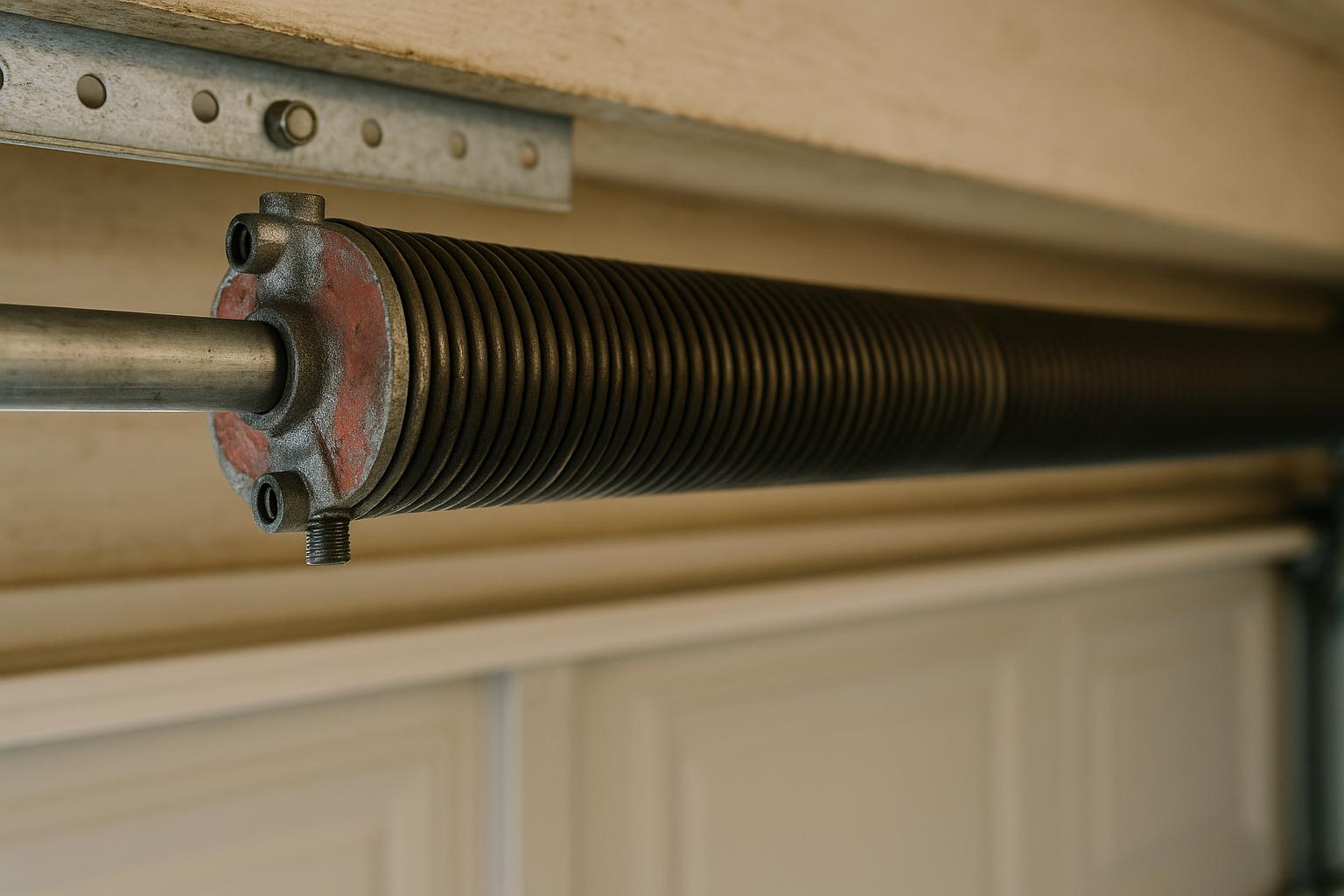
- Torsion springs — Mounted on a metal shaft above the door opening. These wind and unwind to raise and lower the door. Most modern residential doors in Wonder Lake and surrounding areas use torsion springs.
- Extension springs — Mounted along the horizontal tracks on either side of the door. These stretch and contract to assist with door movement. They're more common on older installations.
Both types have a limited lifespan, typically rated for around 10,000 cycles. One cycle equals one full open and one full close. If you use your garage door four times a day, that's roughly seven years of life. Use it more frequently, and that number drops.
Warning Signs Your Springs Are Wearing Out
Springs rarely fail without giving you some advance notice. Here are the most common signs that your garage door springs are nearing the end of their lifespan:
1. The Door Feels Heavier Than Usual
If you disconnect your opener and try to lift the door manually, it should move relatively easily and stay in place when you let go about halfway up. If the door feels extremely heavy or slams down the moment you release it, your springs have lost tension and aren't doing their job anymore.
2. The Door Opens Unevenly or Crooked
When one spring weakens faster than the other — or if one has already broken — the door may rise unevenly, with one side higher than the other. This puts extra stress on your tracks, cables, and opener, potentially causing additional damage if left unaddressed.
3. You Hear a Loud Bang from the Garage
A broken torsion spring releases its stored energy all at once, producing a loud bang that many homeowners describe as sounding like a gunshot or a car backfiring. If you hear this sound coming from your garage, check the spring mounted above the door. A broken spring will have a visible gap in the coil.
4. Visible Wear or Gaps in the Spring
Take a moment to visually inspect your springs from the ground. Look for signs of rust, stretched coils, or an obvious gap where the spring has snapped. Rust is particularly concerning because it increases friction and accelerates wear, shortening the spring's overall life.
5. Your Opener Struggles or Stops Working
When springs fail, the opener has to work much harder to lift the door. You might notice the motor straining, the door opening only partway, or the opener shutting off entirely due to the safety overload feature. Many homeowners assume the opener itself is broken when the real culprit is a failed spring.
6. Cables Are Loose or Hanging
The lifting cables on your garage door work in tandem with the springs. When a spring breaks, the cables can lose tension and become loose or even unwind from the drums. Loose cables are a clear indicator that something has gone wrong with the spring system.
Why You Shouldn't Replace Garage Door Springs Yourself
We understand the DIY spirit — it's strong here in Wonder Lake and throughout the Woodstock and Richmond communities. But garage door spring replacement is one job that genuinely belongs to trained professionals. Here's why:
- Extreme tension: Torsion springs are wound under tremendous force. A spring that slips during installation can cause serious injury or even death.
- Specialized tools required: Proper spring replacement requires winding bars, vice grips, and precise calibration tools that most homeowners don't have.
- Incorrect sizing is dangerous: Springs must be matched precisely to the weight and size of your specific door. The wrong spring can cause the door to slam shut unexpectedly or put excessive strain on the opener.
- Warranty concerns: Many garage door and opener warranties are voided if non-professional work is performed on the system.
Professional spring replacement typically takes under an hour and gives you peace of mind that the job was done safely and correctly.
How to Extend the Life of Your Garage Door Springs
While springs will eventually wear out no matter what, a little maintenance can help you get the most out of them:
- Lubricate your springs regularly. Apply a silicone-based or white lithium garage door lubricant to the coils two to three times per year. This reduces friction and helps prevent rust — especially important during the harsh winters we experience in McHenry County.
- Schedule annual maintenance. A professional tune-up includes checking spring tension, inspecting cables and hardware, lubricating moving parts, and testing the balance of the door.
- Minimize unnecessary cycles. Every open and close counts toward the spring's rated lifespan. If you find yourself opening the garage door out of habit when you could use another entrance, those extra cycles add up over the years.
- Consider high-cycle springs. If you're replacing springs, ask about upgraded high-cycle options rated for 25,000 or even 50,000 cycles. The upfront cost is slightly higher, but the extended lifespan makes them a smart investment for busy households.
What to Do If Your Spring Breaks
If you suspect a broken spring, follow these steps:
- Do not try to open the door using the opener or manually. Operating a door with a broken spring can damage the opener, bend the tracks, or cause the door to fall unexpectedly.
- Disconnect the opener by pulling the emergency release cord to prevent accidental activation.
- Call a professional for repair. Most spring replacements can be completed the same day.
If your car is stuck inside the garage and you need to get out, contact a garage door technician before attempting anything on your own. A professional can safely open the door and complete the repair in one visit.
Reliable Spring Replacement in Wonder Lake and Beyond
At Wonder Lake Garage Door, spring replacement is one of the most common services we provide to homeowners in Wonder Lake, Spring Grove, Ringwood, and throughout the surrounding area. We carry a wide selection of springs to match virtually any residential garage door, and we back our work with honest pricing and no surprise fees.
If your garage door is showing any of the warning signs above — or if a spring has already broken — don't wait for the problem to get worse. Give us a call, and we'll get your door back in safe, reliable working order.