
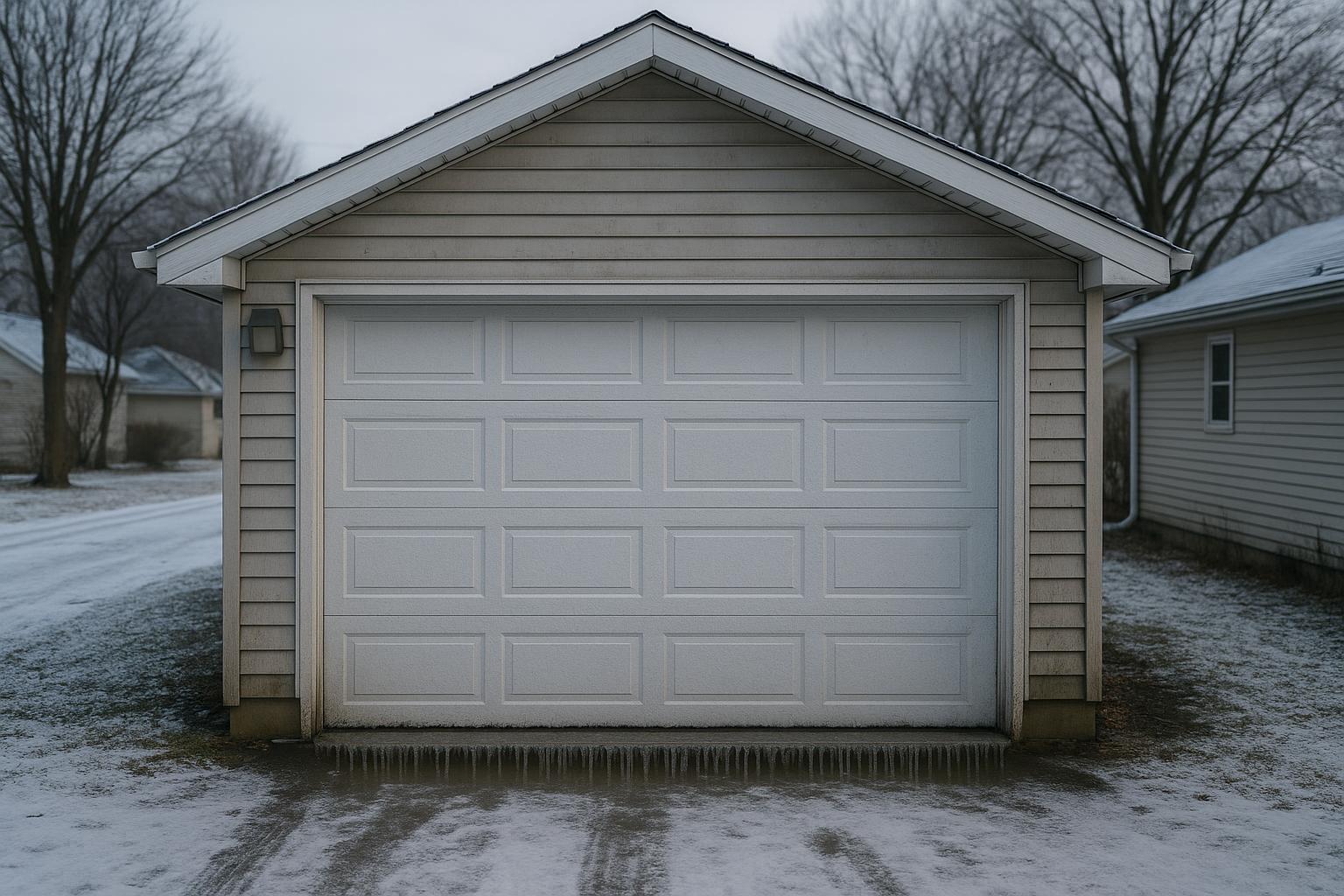
Winter and Your Garage Door: A Common Problem in Wonder Lake
If you've lived in Wonder Lake for even one winter, you know how brutal the cold can get. Temperatures regularly dip well below freezing, and when they do, your garage door can become one of the first things to stop cooperating. You press the button, hear the motor strain, and nothing happens — or worse, the door lifts a few inches and slams back down.
A garage door that won't open in cold weather isn't just an inconvenience. It can make you late for work, leave your car trapped inside, or even create a safety issue if you can't get out of your garage in an emergency. The good news is that most cold-weather garage door problems have straightforward causes and solutions.
Why Cold Weather Affects Your Garage Door
Your garage door is a mechanical system made up of metal parts, lubricants, rubber seals, and electronic components. Every one of those elements reacts to extreme cold. Understanding what's going on helps you figure out whether you can fix the problem yourself or need to call a professional.
1. The Weatherstripping Is Frozen to the Ground
This is the most common reason a garage door won't budge in winter. The rubber weatherstripping along the bottom of your door is designed to create a seal against moisture and drafts. When snow melts and refreezes — or when rain hits the ground and temperatures drop overnight — that seal can literally freeze to your garage floor or driveway.
When this happens, the opener tries to lift the door but meets resistance. Most modern openers have a safety feature that stops the motor when it detects too much resistance, which is why the door may lift slightly and then stop or reverse.
What to do: Never force the door open with the opener, as this can damage the motor, strip the gears, or tear the weatherstripping. Instead, try these steps:
- Use a heat gun or hair dryer to gently warm the bottom seal and melt the ice.
- Carefully tap along the bottom edge of the door with a flat shovel or rubber mallet to break the ice bond.
- Pour warm (not boiling) water along the base to loosen the seal.
- Once free, dry the area as best you can and apply a silicone-based lubricant to the weatherstripping to help prevent it from sticking again.
2. Metal Parts Have Contracted
Metal contracts in cold temperatures. The tracks, springs, hinges, and rollers on your garage door are all metal, and when they shrink even slightly, it can throw off the alignment of the entire system. Contracted metal also increases friction, making it harder for the door to glide smoothly along the tracks.
What to do: Apply a garage door-specific lubricant (silicone or lithium-based spray) to the tracks, rollers, hinges, and springs. Avoid using WD-40 as a long-term lubricant — it's a solvent that can actually strip away grease over time. A proper lubricant reduces friction and helps the door operate even when parts have tightened up from the cold.
3. The Lubricant Has Thickened or Hardened
Standard grease and some lubricants become thick and sluggish in freezing temperatures. If your garage door was last serviced in warmer months, the lubricant on the springs, bearings, and rollers may have turned into a stiff paste that's working against the door rather than helping it.
What to do: Clean off old, hardened grease and reapply a cold-weather-rated lubricant. Lithium-based sprays tend to perform better in low temperatures than standard grease.
4. The Springs Are Struggling
Garage door springs are under tremendous tension, and cold weather makes them more brittle and less flexible. A spring that was already nearing the end of its lifespan may not have enough force to lift the door when temperatures plummet. In the worst case, a cold-weakened spring can snap — which is both dangerous and will leave your door completely inoperable.
What to do: If your door feels unusually heavy when you try to lift it manually, or if you hear loud creaking or popping from the springs, don't try to adjust them yourself. Garage door springs carry enough force to cause serious injury. This is a job for a trained technician.
5. The Opener's Sensitivity Settings Need Adjustment
Your garage door opener has force and limit settings that control how hard the motor works and how far the door travels. In cold weather, the increased friction and resistance from contracted parts and thickened lubricant can exceed the opener's force setting, causing it to stop or reverse as if something is blocking the door.
What to do: Most openers have adjustment screws or digital settings for force and travel limits. Your owner's manual will show you where these are. A small increase in the force setting can help the opener push through the extra resistance. However, be cautious — setting the force too high can be dangerous and may mask a bigger mechanical problem. If a small adjustment doesn't solve the issue, it's time to call for service.
6. The Opener's Battery or Electronics Are Affected
If your garage is unheated and temperatures drop significantly, the electronic components in your opener and remote can be affected. Batteries lose power faster in the cold, and circuit boards can behave unpredictably in extreme temperatures.
What to do: Replace the batteries in your remote and wall-mounted keypad. If the opener itself seems unresponsive, try unplugging it for 30 seconds and plugging it back in to reset the system.
Preventing Cold-Weather Garage Door Problems
The best way to deal with winter garage door issues is to prevent them before the first hard freeze. Here are a few steps Wonder Lake homeowners can take in the fall:
- Schedule a maintenance visit. A professional tune-up before winter ensures your springs are in good shape, your lubricant is fresh and cold-rated, and your opener settings are dialed in.
- Replace worn weatherstripping. If your bottom seal is cracked, brittle, or compressed flat, it's more likely to freeze to the ground and less effective at keeping out cold air and moisture.
- Keep the bottom of the door clear. Shovel snow and clear ice from the base of your garage door regularly. Standing water that refreezes overnight is the number one cause of a stuck door.
- Insulate your garage door. An insulated door maintains more consistent temperatures inside the garage, which reduces the severity of all the issues listed above. It also helps with energy efficiency if your garage is attached to your home.
When to Call a Professional
Some cold-weather problems are easy DIY fixes — a little lubricant, a battery swap, or melting some ice. But others point to issues that require professional attention:
- Springs that are visibly damaged, stretched, or making unusual noises
- A door that's noticeably off-track or crooked
- An opener motor that runs but can't lift the door at all
- Repeated issues that come back after you've tried basic troubleshooting
At Wonder Lake Garage Door, we handle cold-weather service calls throughout the winter for homeowners across Wonder Lake, McHenry, Woodstock, and the surrounding area. Whether your door is frozen shut on a Monday morning or your springs finally gave out during a cold snap, we'll get to you quickly and fix it right.
Don't Wait Until You're Stuck
Winter garage door problems tend to happen at the worst possible time — early in the morning when you're trying to get to work, or late at night when the temperature has bottomed out. A little preventive maintenance goes a long way, but if you're already dealing with a door that won't cooperate, give us a call. We're local, we understand the weather here, and we'll make sure your garage door works when you need it most.