
A Frustrating Problem That Won't Fix Itself
You press the button on your garage door remote. The door starts its descent, and just before it reaches the floor, it stops and reverses back up. You try again. Same result. If you're a homeowner in Wonder Lake dealing with this issue, you're not alone — it's one of the most common garage door problems we see, especially as temperatures shift throughout the year here in northern Illinois.
The good news is that this problem usually has a clear cause. The not-so-good news is that ignoring it can lead to bigger, more expensive repairs down the road. Let's walk through the most likely reasons your garage door reverses before closing and what you can do about each one.
1. Misaligned or Dirty Safety Sensors
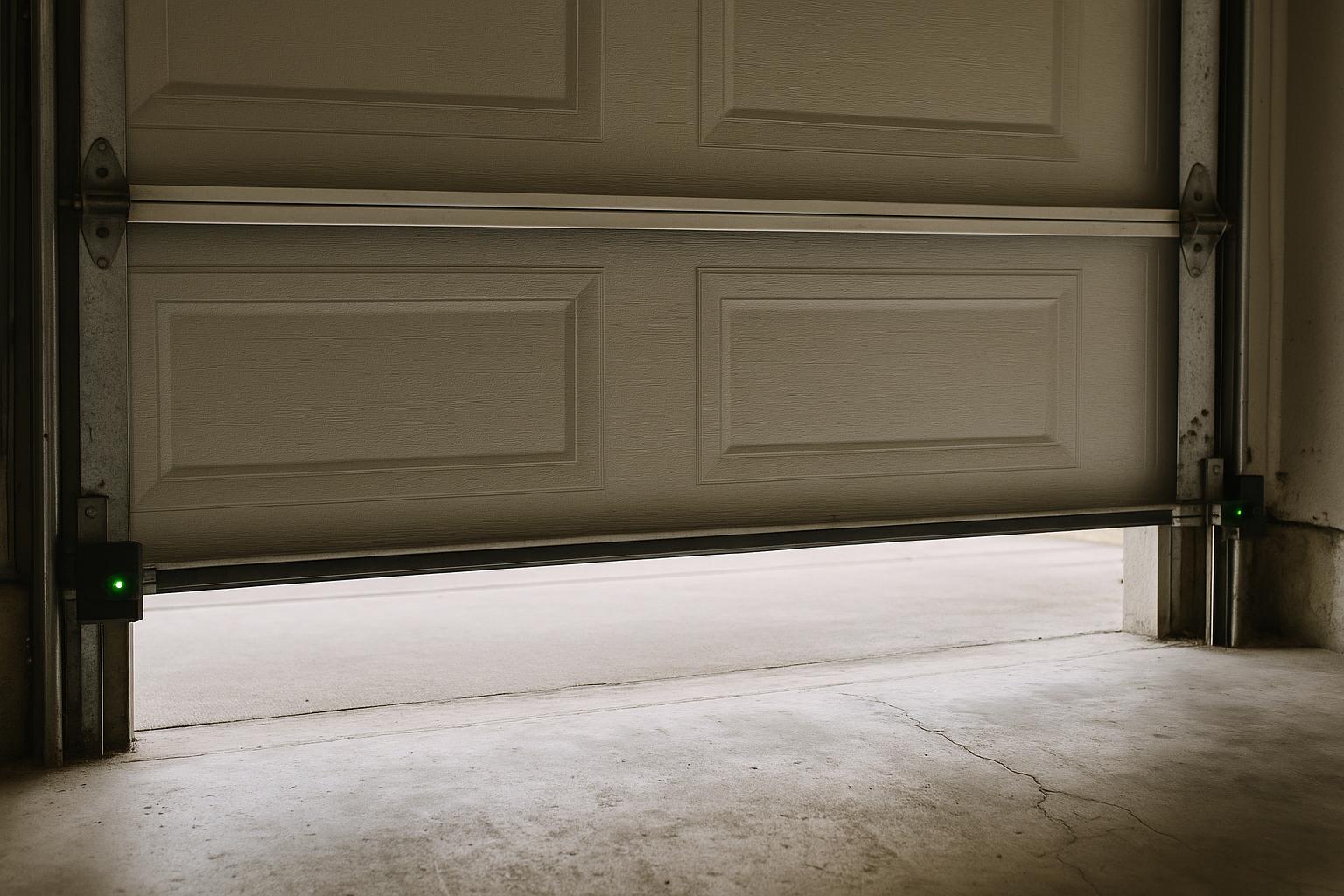
This is the number one cause of a garage door reversing before it reaches the ground. Every garage door opener manufactured after 1993 is required to have photo-eye safety sensors — small devices mounted on either side of the door near the floor. These sensors send an invisible beam across the opening. If anything breaks that beam, the door reverses to prevent it from closing on a person, pet, or object.
Here's what can go wrong with your sensors:
- Dirt or cobwebs covering the lens — a simple wipe with a soft cloth can fix this
- Misalignment — if one sensor gets bumped, the beam can't connect and the door thinks something is in the way
- Sun glare — direct sunlight hitting a sensor can interfere with the beam, especially during summer afternoons
- Damaged wiring — rodents, lawn equipment, or general wear can damage the wires running from the sensors to the opener
Check whether the small LED lights on both sensors are lit and steady. If one is blinking or off, that sensor likely needs to be cleaned, realigned, or replaced.
2. Incorrect Close-Limit Settings
Your garage door opener has close-limit settings that tell it how far the door should travel before it's considered fully closed. If these settings are off — even by a small margin — the opener may interpret the floor as an obstruction and reverse the door as a safety precaution.
This is especially common after a new opener installation or when homeowners attempt to adjust settings on their own. Most openers have adjustment screws or digital controls that allow you to fine-tune the travel distance. However, getting these settings wrong can cause the door to slam into the ground or reverse too early, so it's often best to have a professional handle the calibration.
3. Worn or Broken Garage Door Springs
Your garage door springs do the heavy lifting — literally. They counterbalance the weight of the door so the opener doesn't have to work as hard. When springs start to weaken or break, the door becomes significantly heavier. The opener's built-in force sensor detects this extra resistance and reverses the door because it thinks something is blocking it.
If your door feels unusually heavy when you try to lift it manually, or if you've noticed a loud bang coming from the garage, you may have a broken spring. Spring replacement is not a DIY job. These components are under extreme tension and can cause serious injury if handled incorrectly. If you suspect a spring issue, call a professional right away.
4. Track Problems
The metal tracks on either side of your garage door guide it as it opens and closes. Over time, tracks can become bent, misaligned, or obstructed by debris. When the door encounters resistance from a damaged track, the opener may reverse to protect the system.
Visually inspect your tracks for any obvious bends, gaps, or buildup of dirt and grime. Minor debris can be cleaned out, but bent or misaligned tracks typically need professional attention to avoid causing further damage to the door panels or rollers.
5. Worn Rollers or Hinges
Garage door rollers and hinges wear out over time, especially nylon rollers that haven't been maintained. When rollers crack, chip, or seize up, they create friction that the opener interprets as resistance. The result? The door reverses.
Rollers should generally be inspected and replaced every five to seven years, depending on how frequently you use your garage door. Households in Wonder Lake and surrounding communities like McHenry and Woodstock that use their garage as a primary entry point may need replacements sooner due to higher usage.
6. Opener Force Settings Need Adjustment
In addition to travel-limit settings, most garage door openers have force settings that control how much power the motor uses to open and close the door. If the downward force is set too low, the opener won't push the door all the way down and will reverse prematurely.
While you can adjust force settings yourself on many models, it's important to be careful. Setting the force too high can override the safety reverse feature, which creates a serious hazard. A trained technician can find the right balance between reliable operation and safety compliance.
When to Call a Professional
Some of these fixes — like cleaning sensor lenses or clearing track debris — are simple enough for most homeowners to handle. But if you've tried the basics and your garage door still reverses before closing, it's time to bring in help. Continuing to force the door closed or repeatedly pressing the button can damage your opener motor, strip gears, or cause panel damage.
At Wonder Lake Garage Door, we diagnose reversing issues quickly and provide straightforward solutions without upselling you on parts you don't need. Whether it's a sensor realignment, a spring replacement, or an opener repair, we handle it all for homeowners throughout Wonder Lake, Spring Grove, Richmond, Ringwood, and the surrounding area.
Don't Wait Until You Can't Close Your Door at All
A garage door that reverses intermittently will eventually become a door that won't close at all. That means a wide-open garage overnight, exposure to weather, and a security risk for your home and belongings. If your door has been acting up, address it now before a minor inconvenience becomes an emergency.
Give us a call or reach out online to schedule a diagnostic visit. We'll figure out exactly why your door is reversing and get it working properly — usually in a single visit.